

Endodontics (Root Canal Treatment)
Saving natural teeth with modern, comfortable root canal care
What is root canal treatment?
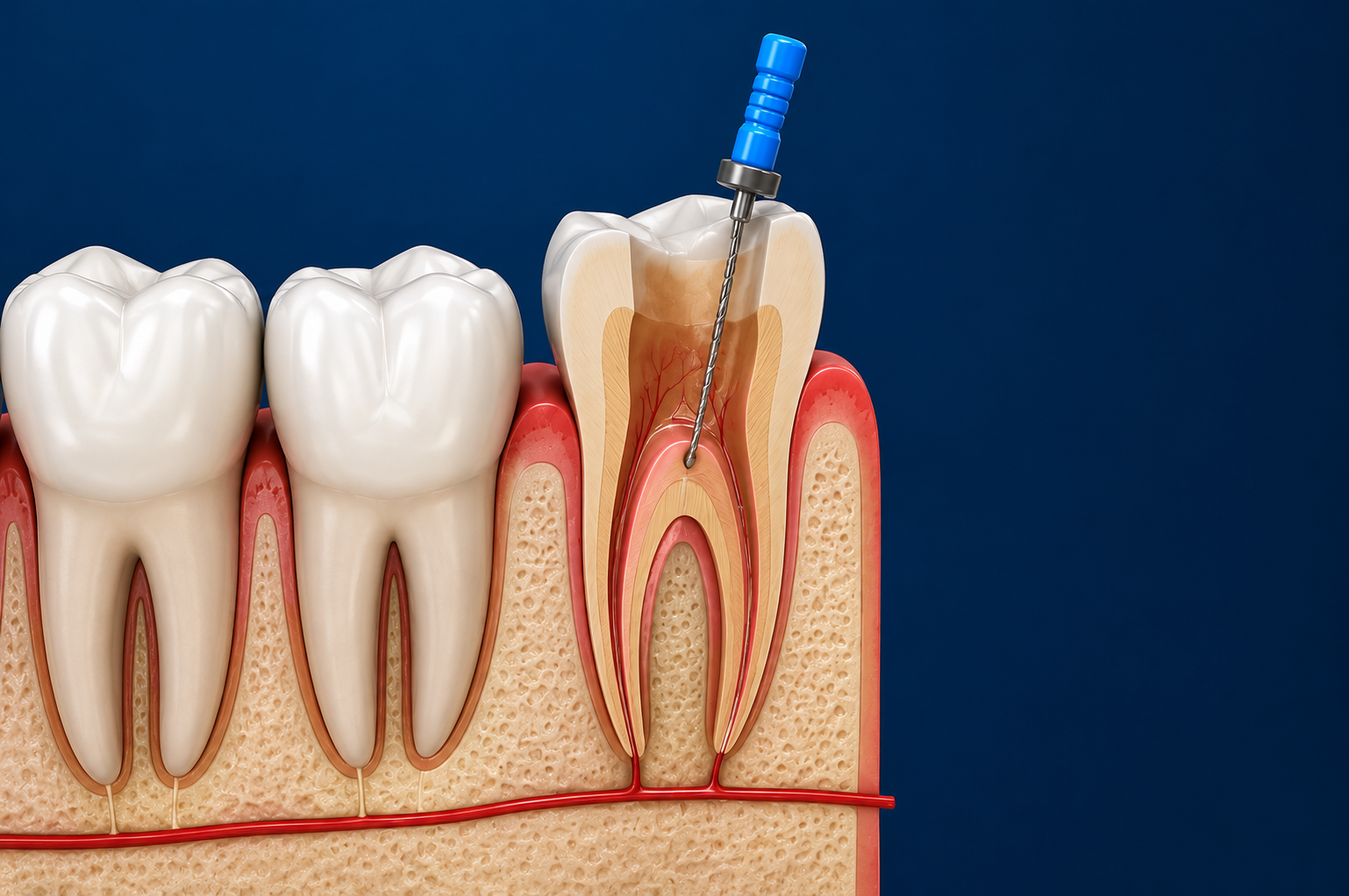
Root canal treatment (endodontics) is a procedure that removes infected or damaged pulp from inside a tooth. The pulp contains nerves and blood vessels that can become inflamed due to decay, trauma or repeated dental work.
Once the infected tissue is removed, the inside of the tooth is cleaned, disinfected and sealed to prevent further infection. The tooth is then restored so it can continue to function normally.
Endodontics (Root Canal Treatment)
Saving natural teeth with modern, comfortable root canal care
What is root canal treatment?
Root canal treatment (endodontics) is a procedure that removes infected or damaged pulp from inside a tooth. The pulp contains nerves and blood vessels that can become inflamed due to decay, trauma or repeated dental work.
Once the infected tissue is removed, the inside of the tooth is cleaned, disinfected and sealed to prevent further infection. The tooth is then restored so it can continue to function normally.
Why root canal treatment is needed
A root canal is usually recommended when bacteria reach the inner part of the tooth. This can occur due to:
- Deep tooth decay
- Cracked or broken teeth
- Injury or trauma
- Long-term wear or repeated dental procedures
If left untreated, the infection can spread beyond the tooth and affect the surrounding bone and gum tissue.
Symptoms of a root canal infection
A tooth requiring root canal treatment may show one or more of the following:
- Persistent or throbbing tooth pain
- Sensitivity to hot or cold that lingers
- Swelling or tenderness in the gums
- A small pimple-like swelling near the tooth
- Darkening or discolouration of the tooth
Some infections may develop without clear symptoms in the early stages.
Key facts
- Root canal treatment is used to treat infection or inflammation inside a tooth
- It helps save your natural tooth and avoid extraction
- Treatment is usually completed over 3 visits
- Local anaesthetic is used, and the procedure is usually comfortable
- Without treatment, infection can worsen and spread to surrounding tissue
Why root canal treatment is needed
A root canal is usually recommended when bacteria reach the inner part of the tooth. This can occur due to:
- Deep tooth decay
- Cracked or broken teeth
- Injury or trauma
- Long-term wear or repeated dental procedures
If left untreated, the infection can spread beyond the tooth and affect the surrounding bone and gum tissue.
Symptoms of a root canal infection
A tooth requiring root canal treatment may show one or more of the following:
- Persistent or throbbing tooth pain
- Sensitivity to hot or cold that lingers
- Swelling or tenderness in the gums
- A small pimple-like swelling near the tooth
- Darkening or discolouration of the tooth
Some infections may develop without clear symptoms in the early stages.
Key facts
- Root canal treatment is used to treat infection or inflammation inside a tooth
- It helps save your natural tooth and avoid extraction
- Treatment is usually completed over 3 visits
- Local anaesthetic is used, and the procedure is usually comfortable
- Without treatment, infection can worsen and spread to surrounding tissue
What does treatment involve?
Root canal treatment is usually carried out over 3 appointments, allowing enough time to thoroughly clean the tooth, eliminate infection, and restore it in a safe and controlled way for long-term success.
Root canal treatment is usually carried out over 3 appointments, allowing enough time to thoroughly clean the tooth, eliminate infection, and restore it in a safe and controlled way for long-term success.
Examination and imaging
Digital X-rays are taken to assess the tooth and surrounding bone.
Anaesthesia
Local anaesthetic is used to numb the area for comfort.
Access and cleaning
A small opening is made in the tooth to remove infected pulp and clean the root canals thoroughly.
Disinfection and shaping
The canals are shaped and disinfected to remove bacteria and prepare for sealing.
Filling and sealing
The canals are filled with a biocompatible material to prevent reinfection.
Final restoration
A filling or crown is placed to restore strength and protect the tooth.
Recovery and aftercare
Mild discomfort or sensitivity after treatment is common and usually settles within a few days.
To support healing:
- Avoid chewing on the treated tooth until restored
- Maintain good oral hygiene
- Take pain relief if recommended
- Attend follow-up appointments if required
A crown is often recommended to strengthen the tooth long term.

Recovery and aftercare
Mild discomfort or sensitivity after treatment is common and usually settles within a few days.
To support healing:
- Avoid chewing on the treated tooth until restored
- Maintain good oral hygiene
- Take pain relief if recommended
- Attend follow-up appointments if required
A crown is often recommended to strengthen the tooth long term.
Frequently Asked Questions
1. Is root canal treatment painful?
With modern anaesthetics, the procedure itself is usually comfortable. Most patients report relief from pain afterwards rather than discomfort during treatment.
2. How long does the treatment take?
Treatment is usually completed over 3 visits, depending on the complexity of the tooth and level of infection.
3. Will I need a crown afterwards?
In many cases, yes. A crown helps protect the tooth from fracture and restores full chewing strength.
4. Can a root canal fail?
Although success rates are high, failure can occur if infection returns or the tooth is not properly restored.
5. Is extraction better than root canal?
Extraction may be quicker, but it removes the tooth entirely. Root canal treatment aims to preserve your natural tooth wherever possible.